
What it Means to Build Spaces Where People Can Be Seen
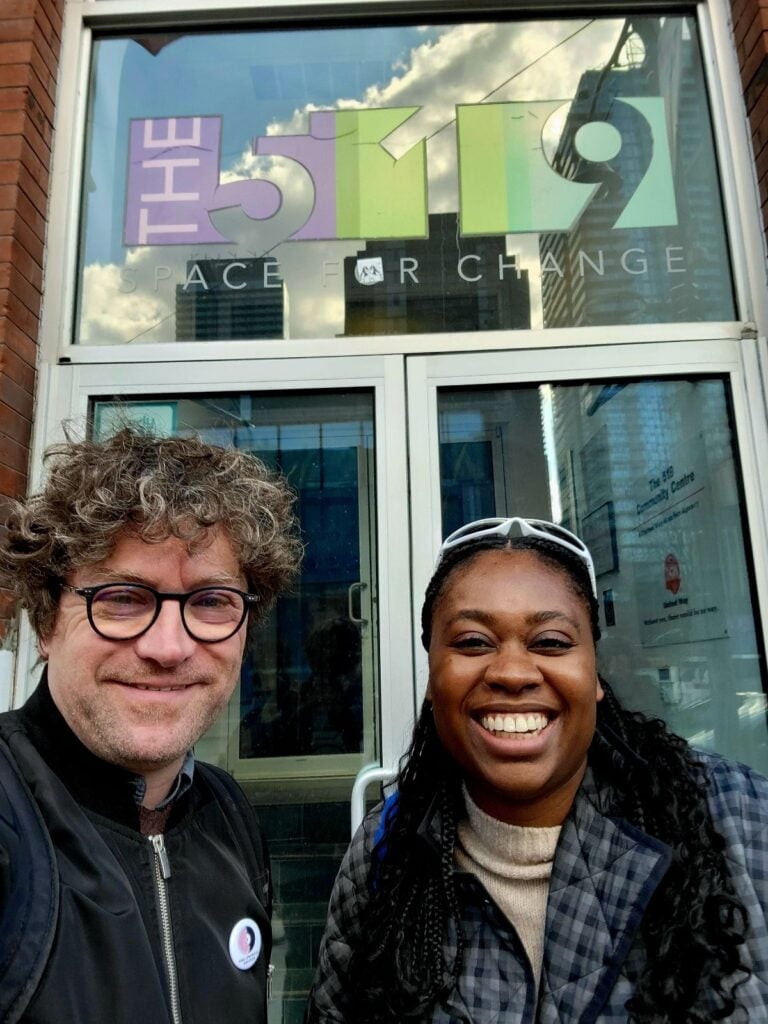
Over the past few years, we’ve had the privilege of working alongside The 519 on a number of projects, each one grounded in a deep commitment to community, dignity, and care for the 2SLGBTQ+ community.
What stands out most as we reflect on our work together is the role The 519 continues to play as a community leader: shaping what it means to create deliberate and intentional services with and for the 2SLGBTQ+ community.
One project captures this particularly clearly: Pacewood.
Building something that didn’t exist before
In 2022, The 519 and Homes First came together to open Toronto’s first shelter dedicated to LGBTQ+ newcomers who have arrived through refugee pathways: Pacewood.
From the beginning, the space was designed with intention. It prioritized trans, gender diverse, and non-binary people, individuals who are often excluded from, or who are unsafe within, traditional shelter systems. The model itself reflects a different way of working: The 519 led intake, programming, and ongoing support and Homes First operated and maintains the shelter. Together, they create a space that is both operationally sound and deeply community-informed.
This kind of partnership is so important. It recognizes that safety is not just about having a bed, it’s about being seen, affirmed, and supported in ways that reflect people’s lived realities. As part of our work, we supported an evaluation of Pacewood, including focus groups and interviews with residents, many of whom are queer and trans refugees navigating their arrival in Canada.
For Kamaria, Sarah, and Paul, TNC team members on this project, this project has shaped how they see program evaluation.
What the community and residents taught us
For many residents, traditional shelter spaces had never felt safe. Experiences of homophobia, transphobia, and discrimination, both in their countries of origin and within social service systems in Canada, shaped how they approached support.
Pacewood worked differently because it was designed differently. Residents described how small but intentional practices made a difference:
- Being welcomed by staff who understood their identities
- Not having to repeatedly explain or defend who they are
- Having a consistent point of contact throughout intake and beyond
- Being part of a space where community, not just crisis, was centered
As highlighted in the evaluation process, community-led intake and support can fundamentally change how people experience services.
This work wasn’t just about comfort; it was about trust, engagement, and ultimately, stability.
Beyond shelter: a continuum of support
Pacewood is one part of a broader ecosystem of support led by The 519.
Through their New to Canada programming, The 519 offers low-barrier, in-person support for LGBTQ+ newcomers. This includes everything from navigating systems and completing complex governmental forms to connecting with community and accessing longer-term supports.
What’s consistent across this work is a recognition that arriving in a new country is not just a logistical transition; it is a deeply human one. And for queer and trans newcomers, that transition is often layered with additional complexity, risk, and resilience.
Leadership that shifts systems
What makes The 519’s work so impactful is not only what they deliver, but how they influence the systems around them. Through initiatives like Pacewood and New to Canada, they are:
- Demonstrating what affirming, community-based models can look like
- Identifying gaps in existing systems
- Translating lived experience into actionable change
- Supporting other organizations to build more inclusive practices
This is leadership that extends beyond a single program or service. It is essential for sector capacity building.
Kamaria and Sarah’s reflections
In our work as evaluators and strategic partners, we often talk about “best practices,” “models,” and “systems change.” But what this work continues to remind us is something simpler: The most effective systems are the ones that start from community, and that stay accountable to it.
The 519 doesn’t just respond to community needs. They help redefine what support can look like when those needs are taken seriously.