
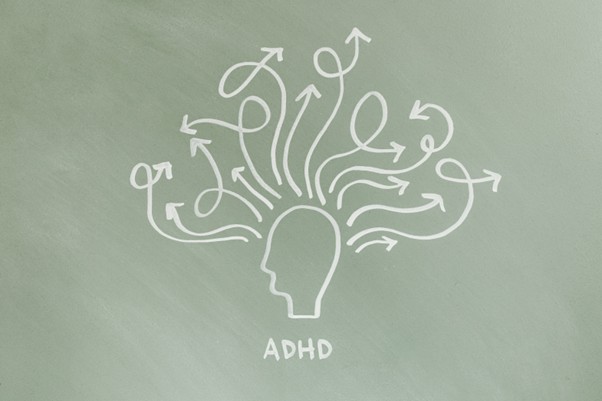
Working with organizations who serve the ADHD community, I’ve come to realize that my lived experience with ADHD isn’t just a personal trait; it’s a powerful tool for connecting with people and understanding them. Whether it’s with adults and youth navigating their own ADHD or with parents supporting children with ADHD, there’s an inherent understanding that transcends typical researcher-participant dynamics. This shared experience creates a unique foundation for building trust and gathering rich, meaningful data when conducting interviews and focus groups with participants.
The Nuances of Sharing My Own Experiences Living with ADHD
As social science researchers trained in colonial, Westernized institutions, we are often taught to play an unbiased role in data collection, analysis, and knowledge mobilization. However, I would argue that it’s nearly impossible to eliminate bias when humans are interacting. So rather than trying to create an impossible “bias vacuum,” I prefer to acknowledge my biases with my participants.
When working with participants with ADHD, I begin each focus group or interview by sharing that I have also been diagnosed with, and am medicated for, ADHD. It is my hope that this signals to my participants that I bring a shared understanding of what it is like to live with ADHD, while also acknowledging that no two experiences are the same. In research, we call this sharing our positionality – how a researcher’s worldview, social identities, experiences, and perspectives shape the research process. Beyond sharing my positionality, I typically only feel compelled to share my own experience when a participant shares a story that I can truly relate to, or when it could help alleviate a participant’s discomfort when they’re discussing a difficult experience, by showing them they’re not alone.
Validating Participants’ Experiences
The core of this researcher-participant connection lies in a mutual understanding. When speaking with someone who has ADHD or a parent who understands the complexities of it, I have an immediate recognition of shared challenges and successes. This understanding fosters a sense of safety and validation, encouraging participants to open up and share their experiences with greater honesty. My own experiences, both the struggles and the strengths, allow me to approach conversations with a level of empathy that goes beyond professional objectivity. This shared language and understanding creates a space where participants feel truly heard, leading to richer, more authentic data.
My Shared Experience Enhanced my Capacity to Facilitate
My ADHD brain’s unique way of processing information allows me to adapt and connect in ways that might be less intuitive to others. The ability to embrace the non-linear thinking style of participants with ADHD, to follow tangents with patience, and to recognize patterns in seemingly disparate pieces of information is invaluable when gathering qualitative data. It allows me to delve deeper into the participant’s experience, to extract the subtle nuances that might otherwise be missed. This, combined with an inherent sense of authenticity and transparency, builds rapport quickly.
Fostering a Sense of Connection
Our evaluations have shown that participants with ADHD are often looking for understanding, validation, and a sense of community, as living with ADHD can often be a lonely experience. My ability to share my own journey created a powerful sense of connection between myself and the participants. My stories weren’t just anecdotes; they were a bridge, showing participants that I truly grasped their realities. This connection and understanding was recognized by my co-researchers at TNC who often consulted me for guidance on how best to approach interviews and focus groups with participants with ADHD.
Benefits and Risks of Sharing my Experiences
Sharing my own experiences offers distinct advantages. Among these is the immediate cultivation of trust and an authentic connection. This helps to break down traditional power dynamics in research, creating a more egalitarian space where participants feel validated and understood, leading to more open and honest dialogue. This approach fosters a deeper level of empathy and rapport, which is crucial for eliciting truly meaningful qualitative data.
However, this practice also comes with its potential risks. While I don’t believe it is possible to eliminate all biases, there’s a delicate balance to strike. The primary concern is the potential for my experiences to inadvertently steer or influence participants’ responses, or for participants to feel a subtle pressure to align their narratives with mine. Sharing your experience can also be emotionally taxing, which might be an unsustainable demand to place on yourself as a researcher. There’s also the need to rigorously maintain professional boundaries, ensuring that my disclosures serve to enhance the research, rather than making the conversation about me. Consciously navigating these potential pitfalls ensures that the participants’ unique perspectives remain the focus of the research.
I feel comfortable sharing in these spaces because I’ve been engaged in deep personal work and shared experiences within the ADHD community for a long time. This history has built my confidence and capacity for vulnerability. However, it’s crucial to emphasize that sharing your own experiences with participants is not a necessary component of effective research. Many valid reasons, including personal comfort, disciplinary training, or specific research objectives, may lead a researcher to choose not to share their lived experiences, and their work can be just as impactful and insightful.
My advice is to engage with your participants in a way that feels comfortable and natural for you as a researcher. For me, that just means sharing my lived experiences when it serves the research.
The Bottom Line
Ultimately, my lived experience with ADHD is not just a personal characteristic; it’s a bridge that allows me to connect with participants with ADHD on a deeper level, fostering trust, and gathering rich, authentic data that truly reflects their experiences.